


Oui, les téléviseurs peuvent être utilisés en extérieur par temps glacial, mais seulement s'ils sont conçus pour les conditions extérieures. Les téléviseurs d'intérieur classiques ne sont pas prévus pour des températures négatives et peuvent développer de la condensation, un temps de réponse lent ou des problèmes de rétroéclairage lorsqu'ils sont exposés au froid hivernal. Les modèles certifiés pour l'extérieur — comme le téléviseur extérieur Sylvox — utilisent des composants résistants aux températures et des boîtiers étanches qui leur permettent de fonctionner en toute sécurité même dans des climats hivernaux rigoureux.
Résumé rapide
● Les téléviseurs d’intérieur ne sont pas conçus pour le froid et peuvent tomber en panne lorsqu’ils sont exposés à l’humidité ou à des températures inférieures à 0 °C.
● Les téléviseurs d’extérieur supportent des plages de températures plus larges, résistent à la condensation et conservent une qualité d’image optimale par temps froid.
● Les propriétaires dans les régions froides choisissent souvent des modèles d’extérieur pour regarder les sports d’hiver en toute fiabilité et pour les rassemblements festifs en plein air.
● Une préparation hivernale simple permet de garantir le bon fonctionnement du téléviseur dans des conditions froides.
Le froid peut-il endommager une télévision ?
Oui. Le froid peut endommager les téléviseurs d’intérieur, tandis que les téléviseurs d’extérieur sont conçus pour éviter ces problèmes.
Risques du froid sur les téléviseurs
● Écran lent ou figé — Les panneaux LCD se rigidifient ou peuvent se fissurer par grand froid.
● Pièces internes fragiles — Les composants peuvent se contracter et tomber en panne.
● Condensation à l’intérieur du téléviseur — L’humidité peut provoquer des courts-circuits.
● Démarrage instable — Les modules d’alimentation peuvent scintiller ou tomber en panne à basse température.
En fait, l’hiver est l’une des saisons les plus actives pour regarder à l’extérieur en Amérique du Nord en raison des grands événements sportifs. Et pendant cette période, de nombreux propriétaires se demandent si un téléviseur peut rester dehors en toute sécurité malgré les températures glaciales, notamment lors d’événements hivernaux comme les playoffs de la NFL. Cette inquiétude concerne surtout les téléviseurs d’intérieur. Les téléviseurs d’extérieur sont testés pour résister au gel, au vent, à l’humidité et aux conditions sous zéro, ce qui en fait une option plus fiable pour les utilisateurs des régions froides.
Erreurs et faits courants concernant la télévision en hiver
| Mythe | Fait |
|---|---|
| Couvrir une télévision d’intérieur la protège pour l’hiver. | Les housses ne peuvent pas empêcher la condensation interne, qui se forme en dessous de zéro. |
| Les écrans LCD se figent instantanément à 0 °C. | Les écrans LCD standard ralentissent, mais les dommages proviennent généralement de l'humidité et des boîtiers non étanches. |
| Vous avez besoin d'un chauffage ou d'un boîtier pour utiliser une télévision en hiver. | Les téléviseurs d'extérieur sont conçus pour résister à des températures inférieures à zéro sans chauffage externe. |
| Les téléviseurs d'extérieur ne sont utiles que par temps chaud. | De nombreux propriétaires les utilisent plus souvent en hiver pour le football et les réunions de vacances. |
La performance en hiver dépend davantage de la façon dont un téléviseur est construit que de la température seule. Les modèles conçus pour l'extérieur sont conçus avec des plages de température de fonctionnement plus larges et une construction étanche, c'est pourquoi ils restent fonctionnels même lorsque les téléviseurs d'intérieur ne le peuvent pas.
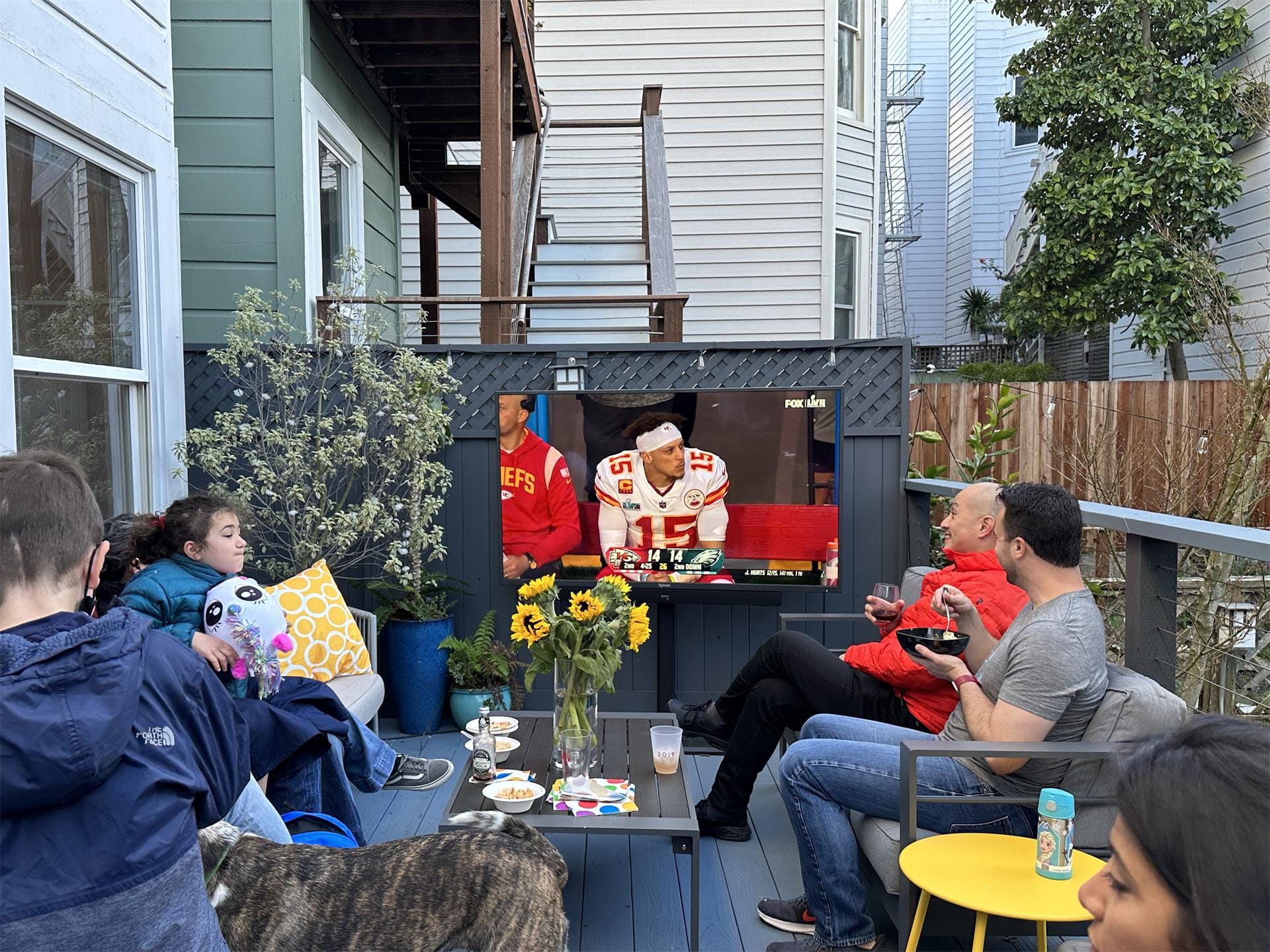
Quelle température une télévision peut-elle supporter à l'extérieur ?
C’est l’une des questions les plus fréquentes des utilisateurs — et la réponse dépend entièrement de si la télévision est conçue pour une utilisation intérieure ou extérieure.
Télévision intérieure vs. télévision extérieure : comparaison des performances en hiver
| Caractéristique | Télévision intérieure | Téléviseur extérieur |
|---|---|---|
| Température de fonctionnement | Typiquement 0°C–35°C | Couramment –30 °C à 50 °C (varie selon la marque) |
| Imperméabilisation | Aucun | Boîtier étanche |
| Protection contre la condensation | Très faible | Flux d'air interne contrôlé + étanchéité |
| Performance de l'écran LCD par temps froid | Lent ou non fonctionnel | Réponse du panneau prête à froid |
| Risque par temps glacial | Risque élevé d'échec | Protégé pour une utilisation en dessous de zéro |
Voir les télévisions extérieures conçues pour des températures sous zéro.
Le principal point de défaillance des télévisions intérieures utilisées à l'extérieur n'est pas simplement « froid », mais froid + humidité + variations de température autour de zéro. Les télévisions extérieures sont spécifiquement conçues pour éviter cette combinaison de risques.
Plusieurs utilisateurs de Sylvox dans le Michigan et le Wisconsin rapportent que leurs télévisions extérieures sont restées intactes pendant l'hiver, même lorsque les températures sont tombées en dessous de –10°F. Ces cas aident à illustrer comment les télévisions extérieures résistent dans de réelles conditions hivernales.
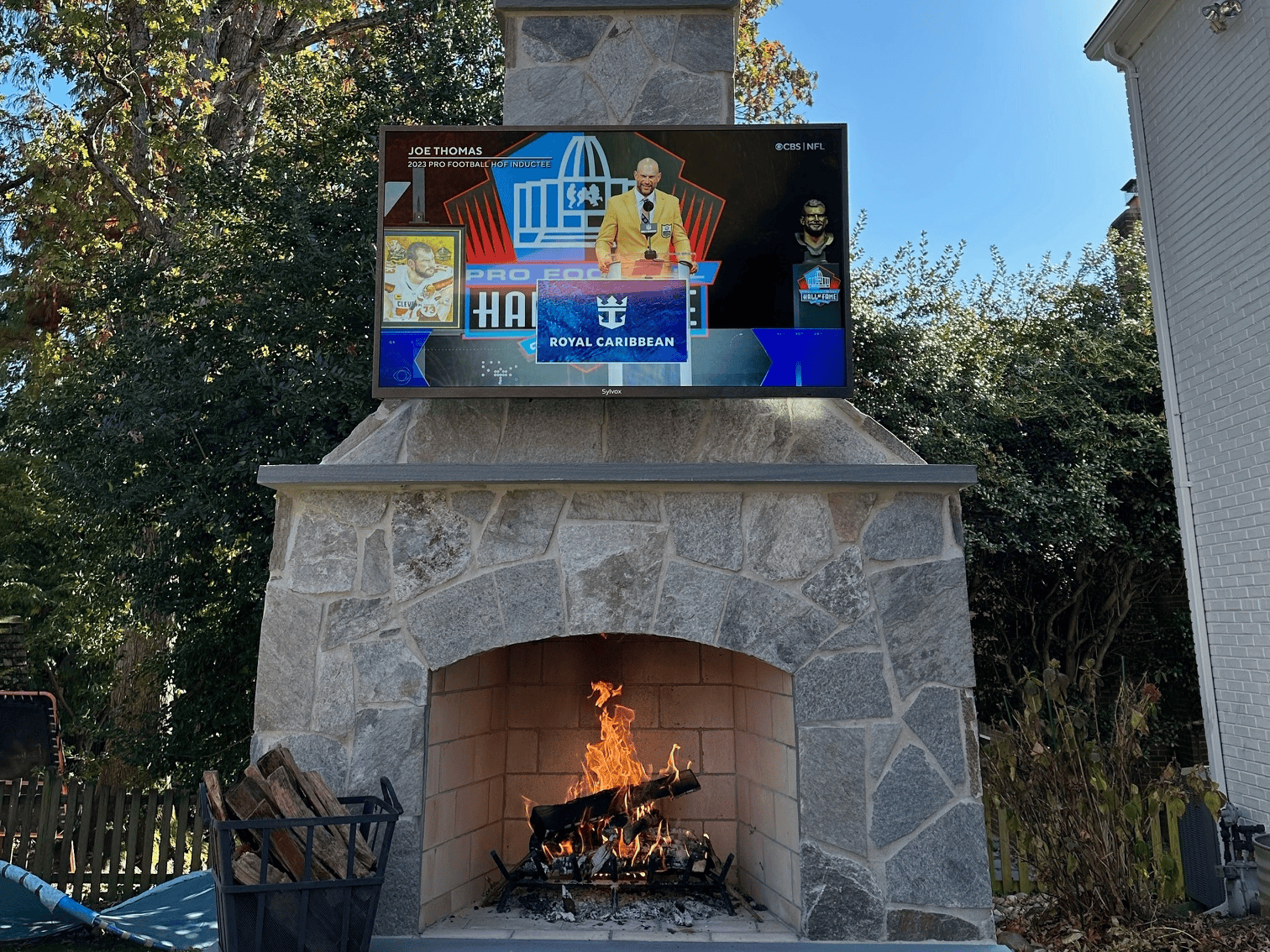
Comment les téléviseurs d'extérieur restent stables par temps glacial
Les téléviseurs d'extérieur gèrent le temps froid non pas avec des accessoires, mais grâce à un design intégré.
1. Système d'alimentation stable par temps froid
Les modules d'alimentation certifiés pour l'extérieur maintiennent une sortie constante même lorsque les températures chutent ou que le circuit fluctue en hiver.
2. Comportement des LCD et de l'éclairage de fond à basse température
Les panneaux LCD prêts pour le froid empêchent les mouvements lents et aident à maintenir la clarté de l'image dans des conditions de gel.
3. Prévention de la condensation
Une structure étanche aux intempéries avec un flux d'air interne contrôlé empêche l'accumulation d'humidité lors des variations de température — la cause la plus courante de défaillance des téléviseurs en hiver.
4. Boîtier étanche aux intempéries
Un boîtier étanche bloque la neige, le gel et l'humidité entraînée par le vent.
5. Composants certifiés pour les variations de température
Les téléviseurs d'extérieur utilisent des matériaux et des connecteurs qui résistent à la contraction et à l'expansion dans les climats froids.
Des marques professionnelles de téléviseurs d'extérieur telles que Sylvox valident ces capacités par temps froid grâce à une classification étanche IP56, des panneaux LCD de qualité industrielle et des tests de fiabilité à basse température. Ces mesures de conception et de test permettent aux téléviseurs d'extérieur Sylvox de démarrer de manière fiable et de maintenir la qualité de l'image pendant les conditions hivernales typiques observées dans les régions froides du nord des États-Unis — l'une des raisons pour lesquelles ils sont souvent choisis dans les climats plus froids.
Comment préparer votre téléviseur extérieur pour l'hiver
Voici des étapes pratiques pour préparer votre téléviseur extérieur à l’hiver et réduire les risques liés au froid :
✓ Allumez la télévision quelques minutes à l’avance pour stabiliser les composants
✓ Évitez de débrancher la télévision à plusieurs reprises par des températures négatives
✓ Dégagez la neige des zones de ventilation
✓ Assurez-vous que les prises extérieures sont correctement étanches
✓ Utilisez une housse de protection lorsque la télévision est éteinte pour réduire le choc thermique
Ces habitudes aident à garder votre téléviseur extérieur sûr et fiable par temps froid.
FAQ : Questions réelles des utilisateurs sur l’utilisation des téléviseurs d’extérieur par temps froid
1. Un téléviseur peut-il être à l'extérieur par temps froid ?
Les téléviseurs d'intérieur ne devraient pas l'être. Les téléviseurs d'extérieur sont conçus pour des températures basses et une exposition aux intempéries.
2. Quelle température un téléviseur peut-il supporter à l'extérieur ?
- Téléviseurs d'intérieur : Typiquement 0°C–35°C
- Téléviseurs d'extérieur : –30°C à 50°C (varie selon la marque)
Par temps froid, les téléviseurs d'intérieur ont généralement besoin de températures supérieures à 0°C, tandis que les modèles conçus pour l'extérieur — comme le téléviseur d'extérieur Sylvox — peuvent fonctionner en toute sécurité jusqu'à environ –30°C.
3. Les températures froides endommagent-elles un téléviseur ?
Le froid seul cause rarement des dommages ; l'humidité + les cycles de gel-dégel le font. Les téléviseurs d'extérieur préviennent cela grâce à une structure étanche et un contrôle de l'humidité.
4. Les téléviseurs d'extérieur ont-ils besoin de chauffages en hiver ?
Non. Les téléviseurs d'extérieur sont conçus pour réguler la température sans chauffages supplémentaires.
5. Pourquoi les utilisateurs choisissent-ils le téléviseur d'extérieur Sylvox pour les climats froids ?
Parce qu'ils offrent des conceptions adaptées à l'extérieur qui sont testées pour leur fiabilité par temps froid et conçues pour supporter les conditions hivernales typiques des climats des régions froides.
Points clés à retenir
● L’hiver met les téléviseurs à l’épreuve avec le froid et l’humidité — pas seulement le froid.
● Les téléviseurs d’intérieur ne conviennent pas au gel ni à l’humidité extérieure.
● Les modèles d’extérieur utilisent des boîtiers étanches, des composants adaptés aux températures et une gestion de la condensation.
● De nombreux propriétaires dans les régions froides choisissent des téléviseurs d’extérieur pour une performance fiable en hiver.
● Avec quelques étapes simples de préparation, votre téléviseur d’extérieur reste sûr et fiable même pendant les mois les plus froids.
Vivez-vous dans un climat froid ?


